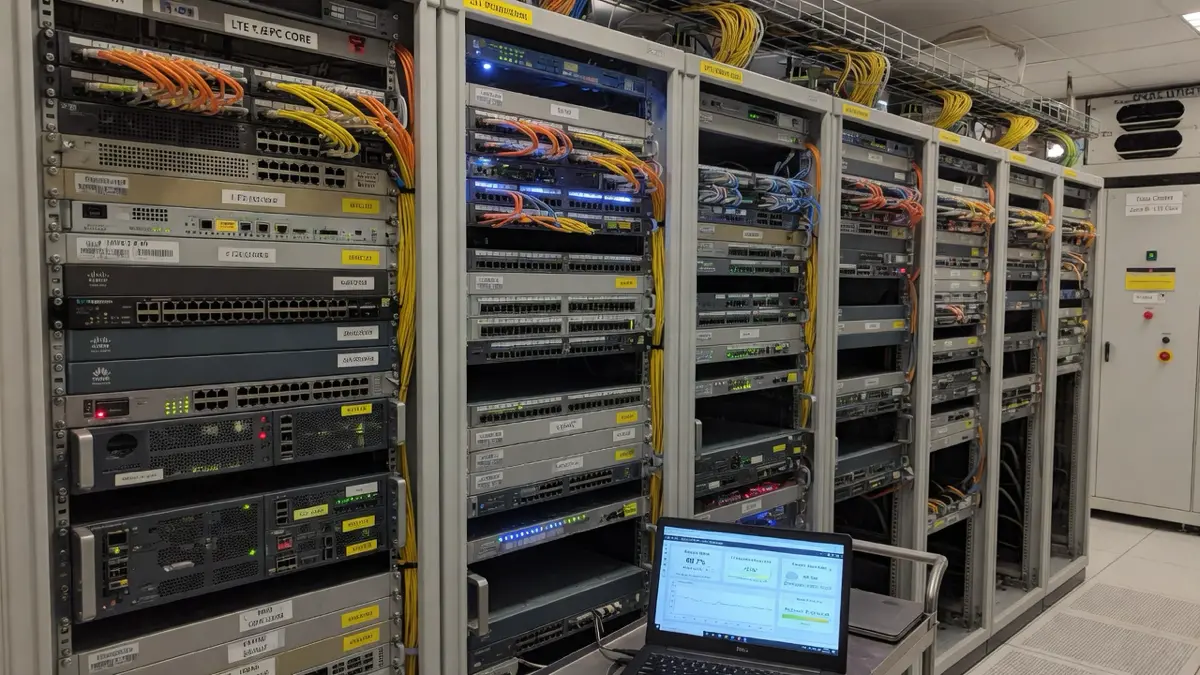

LTE Core
The LTE Core (Evolved Packet Core or EPC) is the brain behind every 4G pLTE connection. While the radio access network (eNodeB) gets all the hype for speed, the core quietly handles authentication, mobility, data routing, IP allocation, QoS, and charging. Key Components • MME — Mobility Management Entity: The control-plane boss. Handles signaling, handovers, authentication, and session setup. • SGW — Serving Gateway: Anchors user-plane traffic. Routes packets and manages mobility between base stations. • PGW — PDN Gateway: The exit door to the internet. Assigns IP addresses, applies policy, and connects to external networks. • HSS — Home Subscriber Server: The master database of subscriber profiles, authentication keys, and allowed services. • PCRF — Policy & Charging Rules Function: The rule-maker. Decides QoS levels and how to bill you. EPC replaced the complex, hierarchical 3G core with a flat, all-IP architecture with lower latency, faster handovers, and true mobile broadband. It’s the reason your phone can seamlessly switch towers while streaming 4K without dropping the session. Today, as operators roll out 5G, the EPC is being upgraded or replaced by the cloud-native 5G Core (5GC) with its service-based architecture. But LTE core remains the workhorse powering billions of devices worldwide and in oil and gas specificall. Short, powerful, and foundational. The invisible engine of modern mobile life. #LTE #4G #EPC #Telecom #MobileCore #pLTE